
Breaking the Ice Ceiling: How a small Olympic sport is taking root in a cricket-crazy nation.
8th of September, 2026 - Geneva, Switzerland
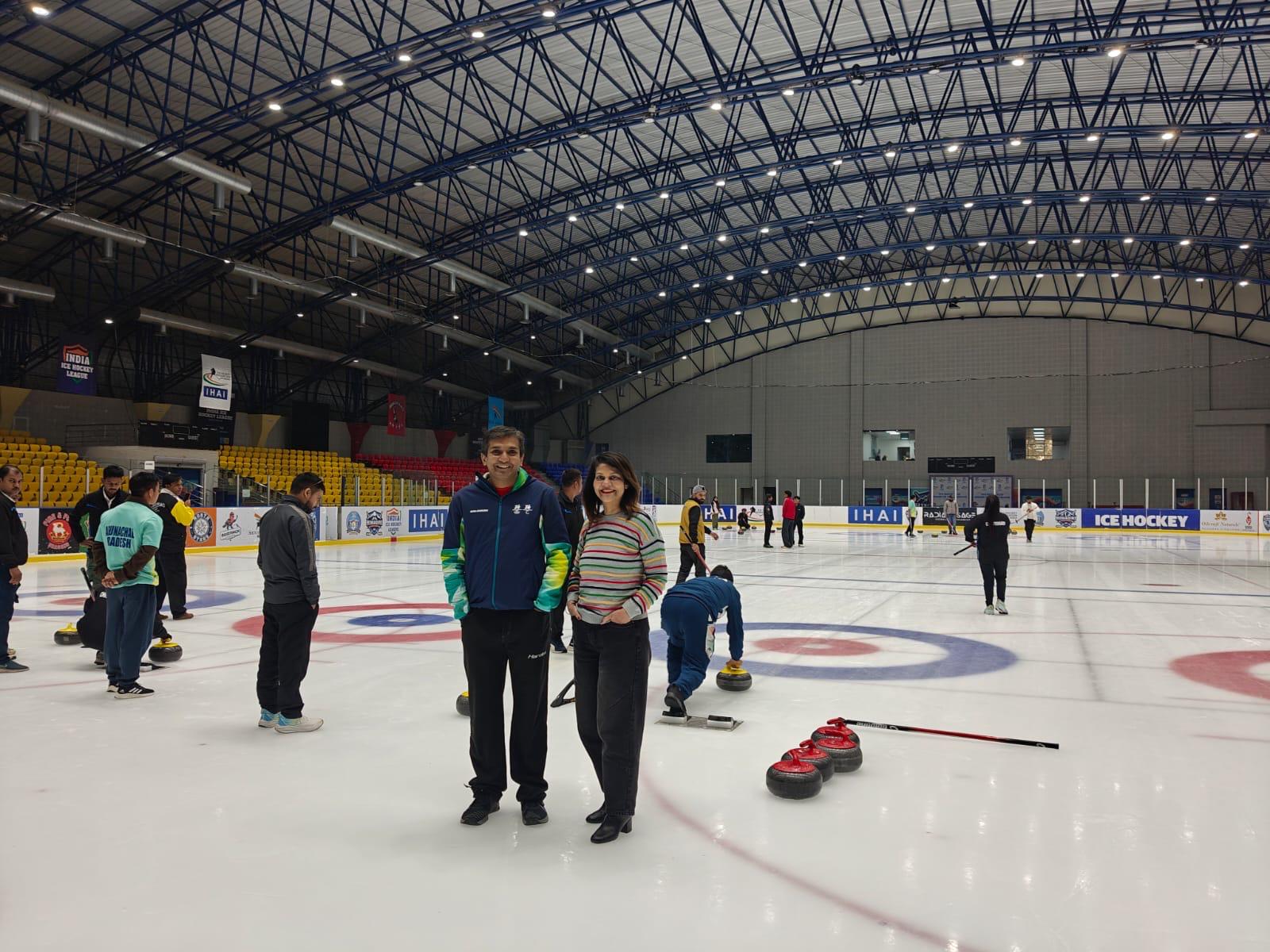
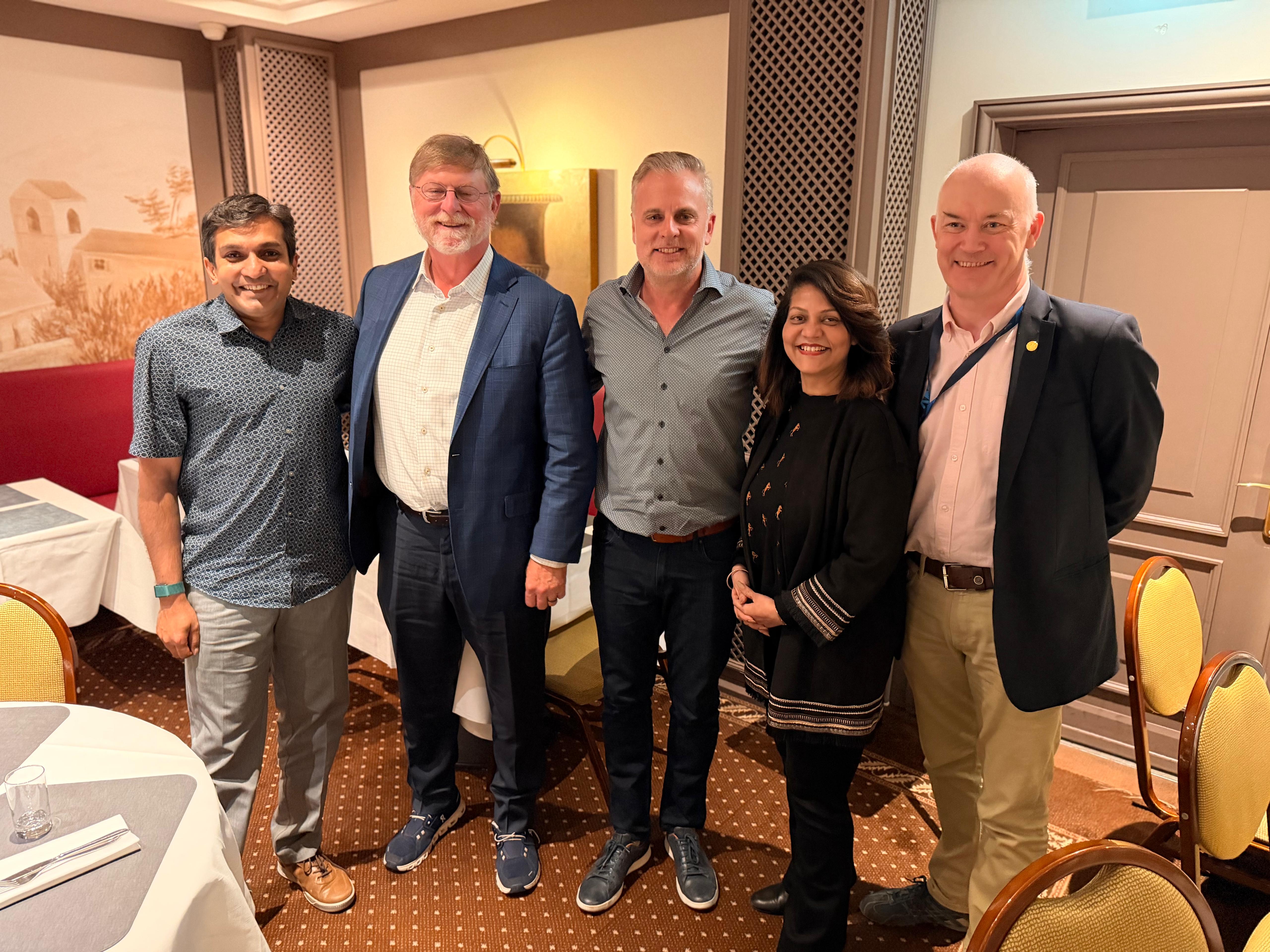
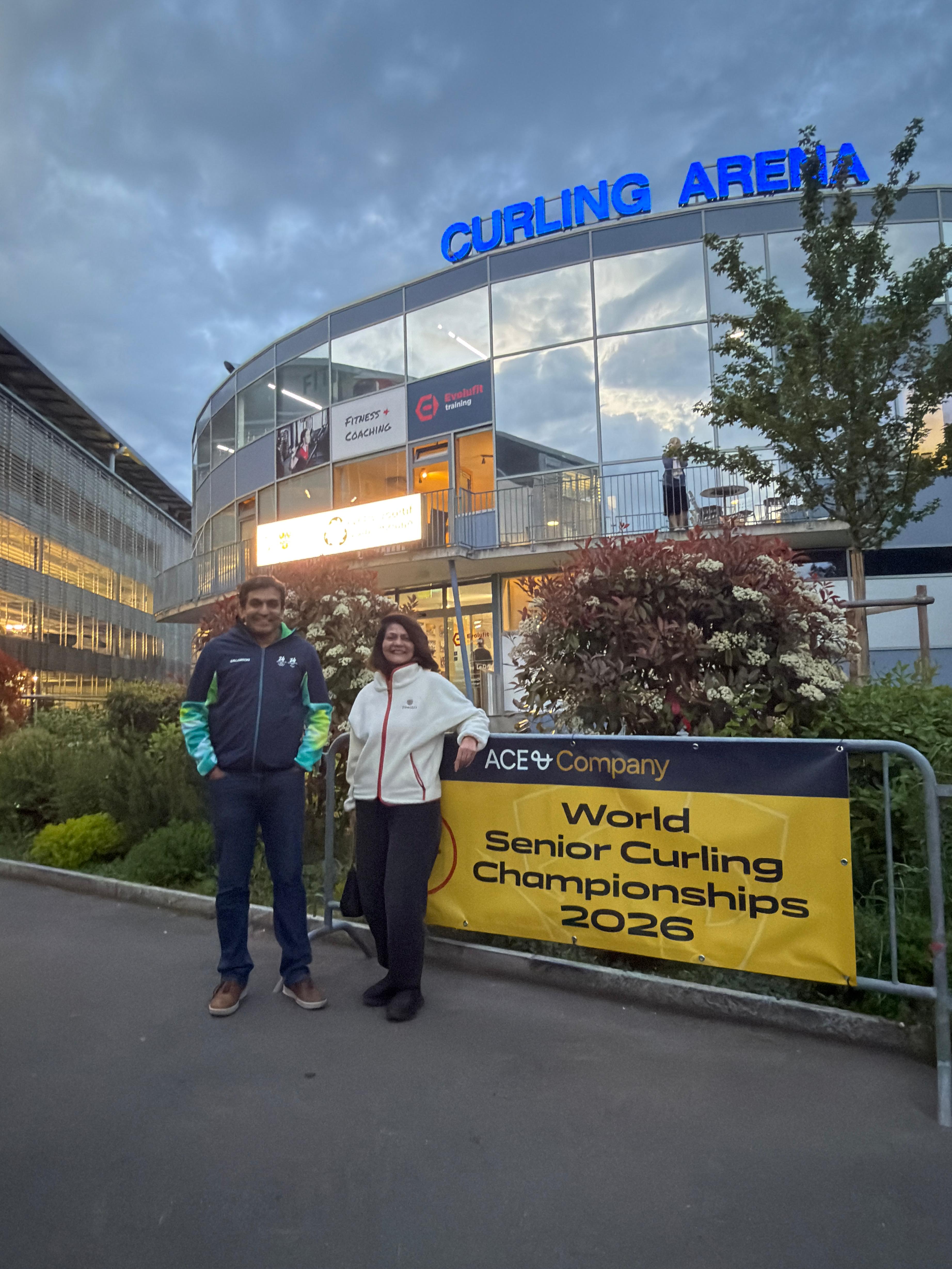
Not long ago, curling in India was a curiosity glimpsed once every four years on Winter Olympics broadcasts. Today, Indian teams compete on the world stage, India has a voice inside the sport's global governing body, and young athletes across the country are picking up their first stones. Indian curling has made a name for itself, and it has done so from a standing start, in a country where few people have ever seen a sheet of curling ice. That story says something larger about winter sport in India. The potential has always been there. What turns potential into results is strong leadership driven by passion and a clear strategic vision. In curling, that leadership has come from two people: Dr Rashmi Saluja, Chairman of ProGrow International and President of the Curling Federation of India, and P. N. Raju, international athlete and skip of India's national men's, mixed, and mixed doubles teams. The potential is already there India is rarely thought of as a winter sports nation, but it could be one. The Himalayas run across the country's north, from Ladakh and Kashmir through Himachal Pradesh and Uttarakhand to Sikkim and Arunachal Pradesh. These regions have long winters, reliable snow and natural ice. Gulmarg, Ladakh, and Dehradun already host national winter competitions, and the Khelo India Winter Games have brought winter sport into the national calendar. The audience is there too. Raju likes to point out that when the Winter Olympics are on, curling is one of the most-watched winter sports in India. The game suits the country's temperament. It rewards strategy over strength, and as Raju likes to point out "curling is like chess on ice, and chess was invented in India." Curling is also one of the most inclusive sports in the Olympic movement. Men, women and athletes with disabilities all compete. Floor curling means a beginner can learn the game in a school hall or an indoor stadium long before stepping onto ice. Potential needs leadership Potential alone does not build a sport. Talented young athletes in mountain valleys need a pathway: a place to learn, coaches to teach them, competitions to test them and a national team to aspire to. A federation needs recognition from the world body, funding that lasts beyond a single season, and partners in central and state government. None of that happens by accident. It takes leaders who can see ten years ahead, build institutions patiently and keep going through the lean years. Indian curling has had that kind of leadership. Dr Rashmi Saluja: building the institution Dr Saluja brings a rare mix of experience to sport. A physician by training who went on to lead in the corporate world, she is today Chairman of ProGrow International, a platform for building institutions across financial services, infrastructure, technology, life sciences, sports and international cooperation. Building institutions is exactly what a young sport needs. As President of the Curling Federation of India, she has given the federation stature and dynamism. Under her leadership, national championships became an annual fixture in Gulmarg, drawing athletes from states across the country. She has championed the sport with governments, most recently in Ladakh, where curling is now part of the territory's sports policy. Her vision for the federation is simple to state and demanding to deliver: to make curling a mainstream winter sport in India, built on competitive spirit, inclusion and sportsmanship. P N Raju: putting India on the curling map Raju's own story mirrors the sport's. He discovered curling watching the Winter Olympics on television, fell in love with it, and threw his first stones several years later while working in the United States. He has led India's national men's team ever since. He was there for the early defeats on Canadian ice, for India's first international medal, and for the 2026 promotion that put India one step from a world championship. Just as important is his work off the ice. Raju has been an integral part of Curling Federation of India’s grassroots initiatives and now serves on several of World Curling's Commissions (DEI, Governance and Development), giving India a seat at the table where the sport's future is decided. As a serial entrepreneur, he brings a strategist's patience to go with an athlete's experience. A strategic vision for the next decade Indian curling has shown what is possible. The next decade will decide whether that progress becomes permanent, and the priorities are clear: • Ice. Dedicated facilities would let the best players train all year, not only in the depths of a mountain winter. • Grassroots. Floor curling programmes in schools and colleges can bring the game to every state. • Coaching. Home-grown coaches and officials will build expertise that stays in India. • Breadth. Women's, junior and wheelchair curling can grow alongside the men's game. • Partnership. Steady support from central and state governments and from business will turn one good season into a lasting system. Each of these calls for the same qualities that brought curling this far: strong leadership, a long view and the patience to build. The lesson applies well beyond curling. Every winter sport in India has the same untapped potential, and each one will need the same kind of vision to realise it. Playing the long game Curling is a game of patience. A good skip plans several stones ahead, reads the ice and trusts the team to deliver. Indian curling has been built the same way, by leaders who looked past the next game to the shape of the sport a decade from now.